AS-Motor inženjeri profesionalna rješenja za uređenje krajolika
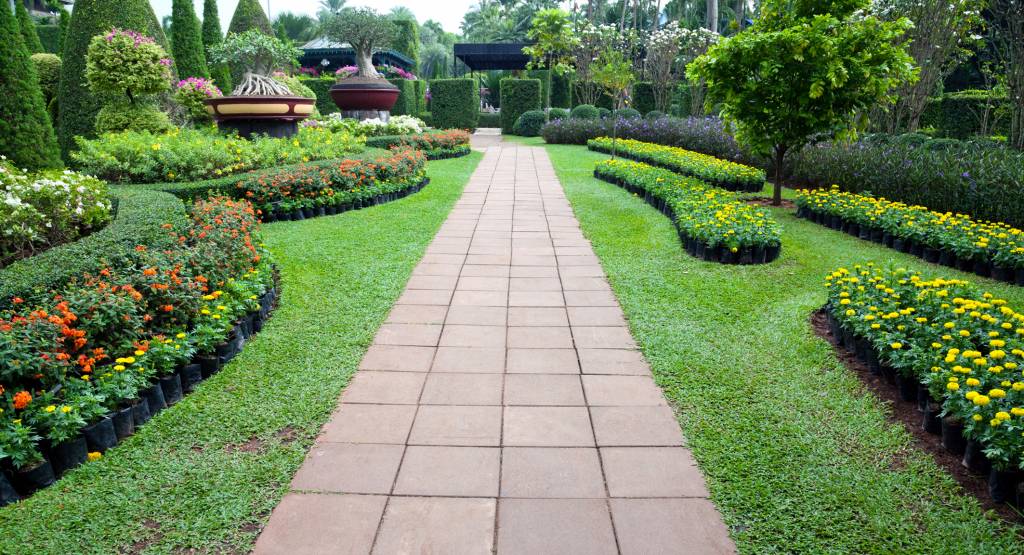
Profesionalni vrtlari i uređivači krajolika pouzdano se oslanjaju na profesionalnu tehnologiju AS-Motora.
Uređivači krajolika i vrtlari odgovorni su za širok spektar zadataka. Oni moraju dizajnirati, konstruirati i prije svega održavati zelene površine svojih klijenata, kao što su privatni vrtovi, parkovi, veliki travnjaci oko javnih zgrada, rubovi cesta, sportske površine i groblja. Čak se može raditi i o njezi i očuvanju drveća. Uređivači krajolika moraju osigurati najkvalitetniji rad uzimajući u obzir ekonomične razmatranja. Profesionalna tehnologija AS-Motora nudi precizna rješenja za razne zadatke vrtlarstva i uređenja krajolika.
Primjene AS-Motora u sektoru uređenja krajolika:
Travnjaci javnih zgrada
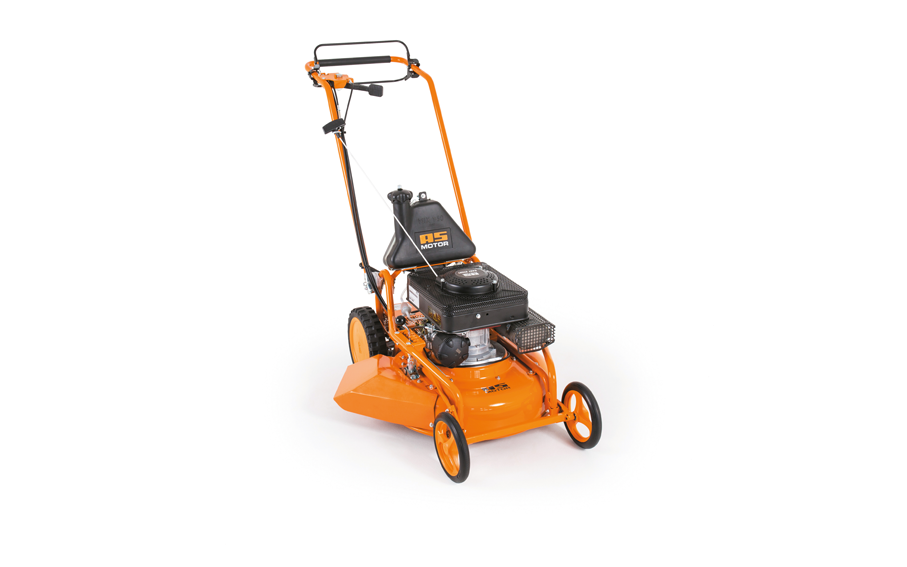
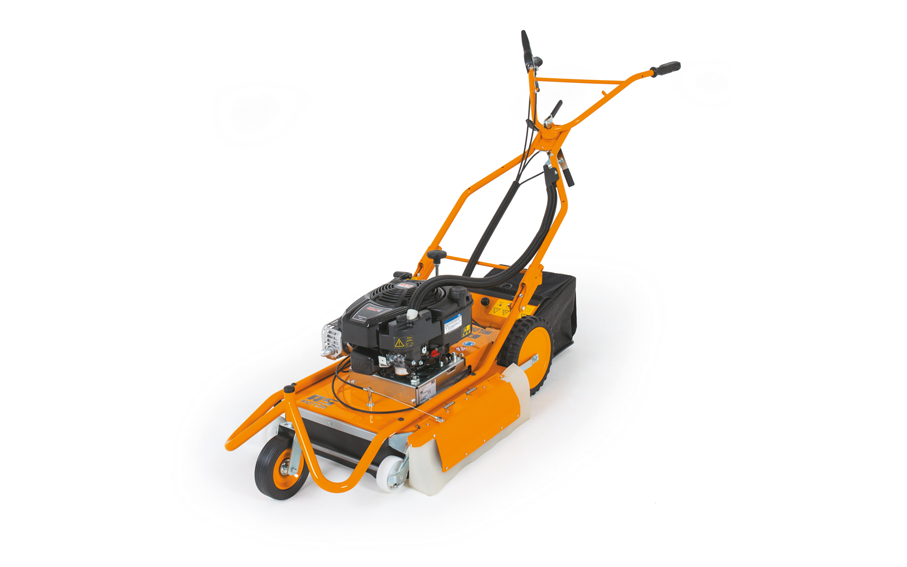
Zelene površine povećavaju vrijednost zgrade i doprinose iskustvu onih koji tamo rade. Profesionalna košilica za travnjake AS 531 idealno je rješenje zbog svoje impresivne izvedbe u svakodnevnoj upotrebi.
Poslovne zelene površine
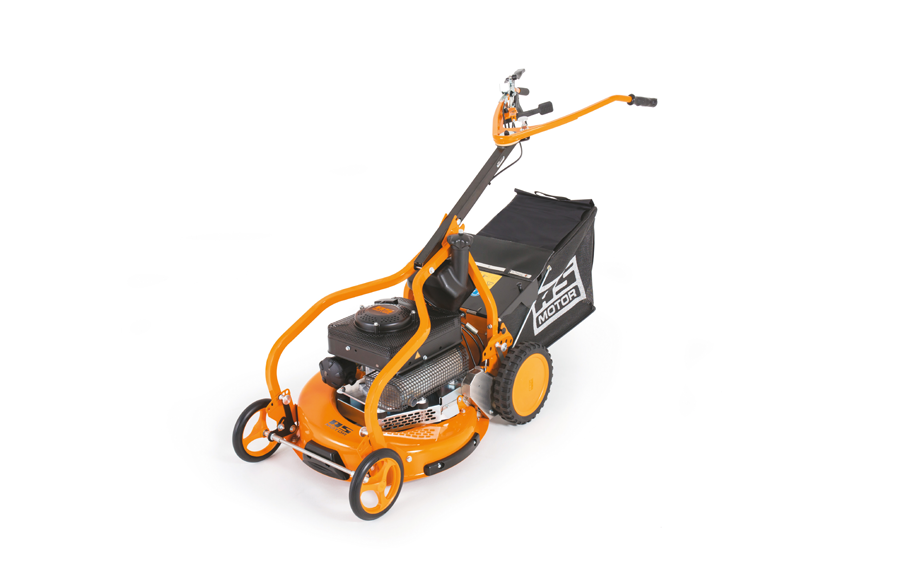
Travnjaci oko poslovnih zgrada dodaju ugled i profesionalni izgled poduzeću. Uređivači krajolika oslanjaju se na profesionalne mulčajuće košilice AS-Motora za redovitu njegu ovih površina.
Rekreativne površine
Košilica za travnjake AS 531 s vrećom za prikupljanje idealno je rješenje za igrališta, dok profesionalne mulčajuće košilice AS-Motora nude stručna rješenja za golf terene i sportske površine.
Periferna područja
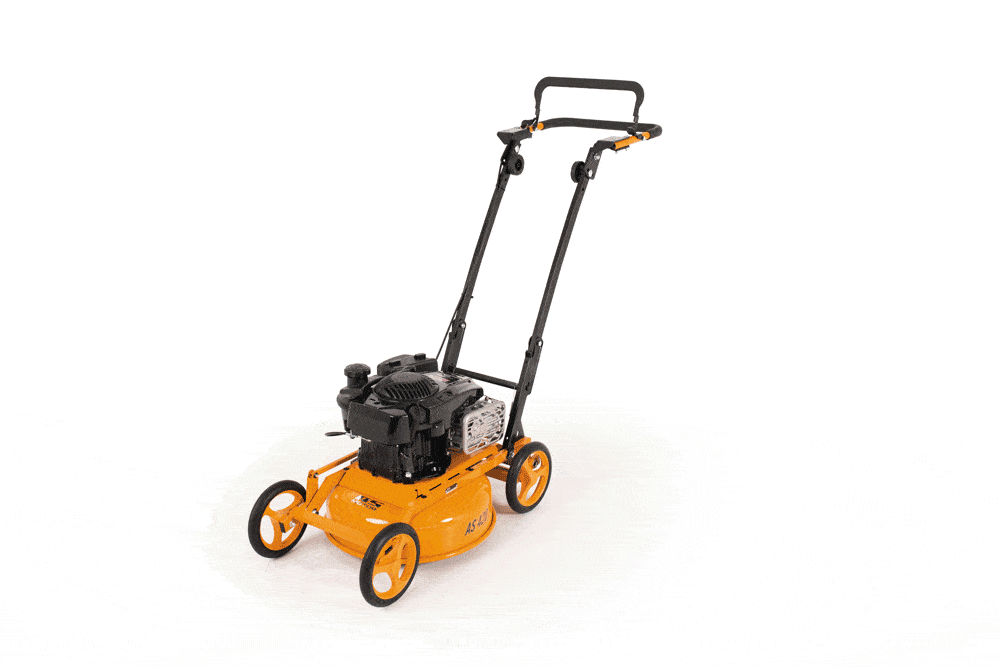
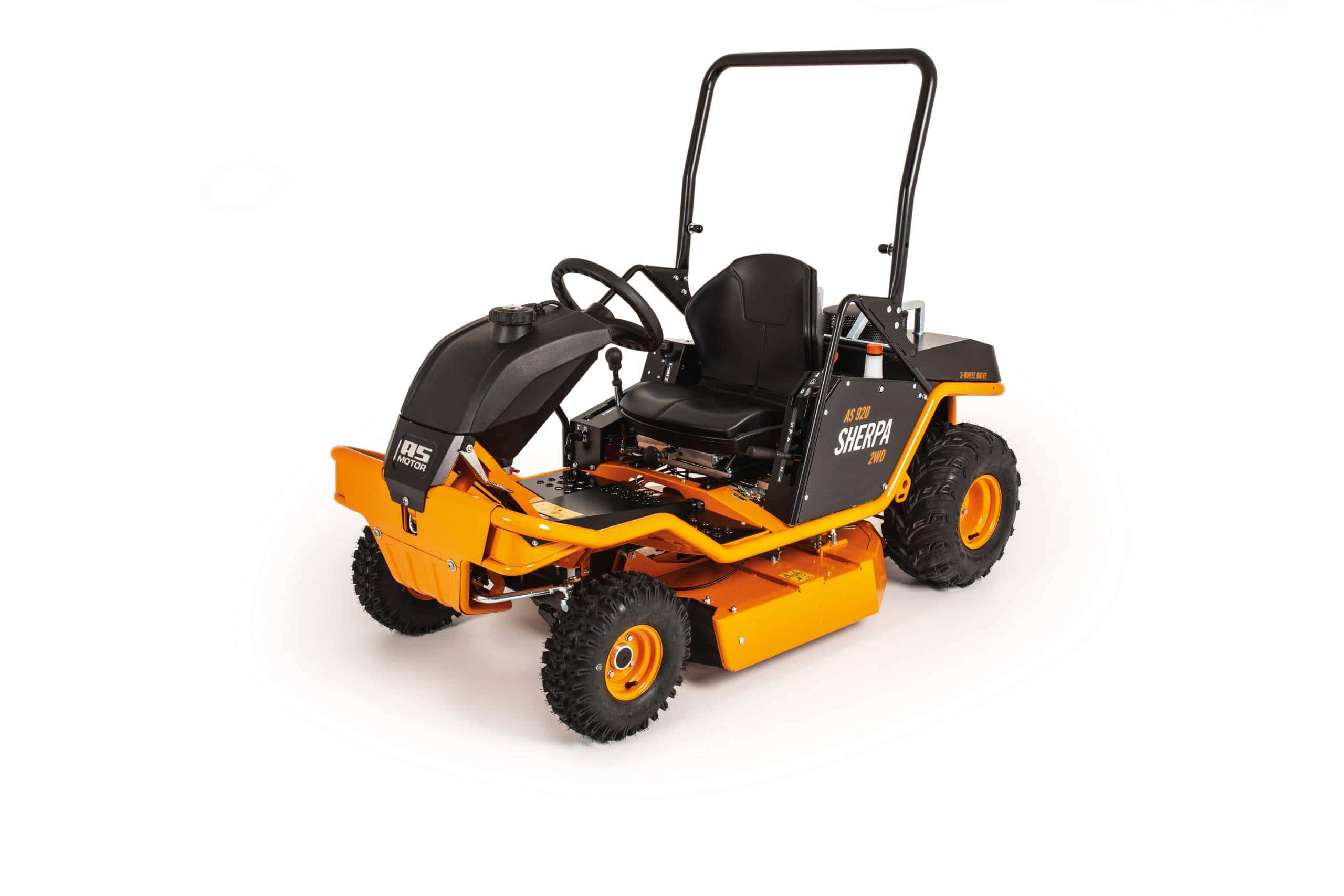
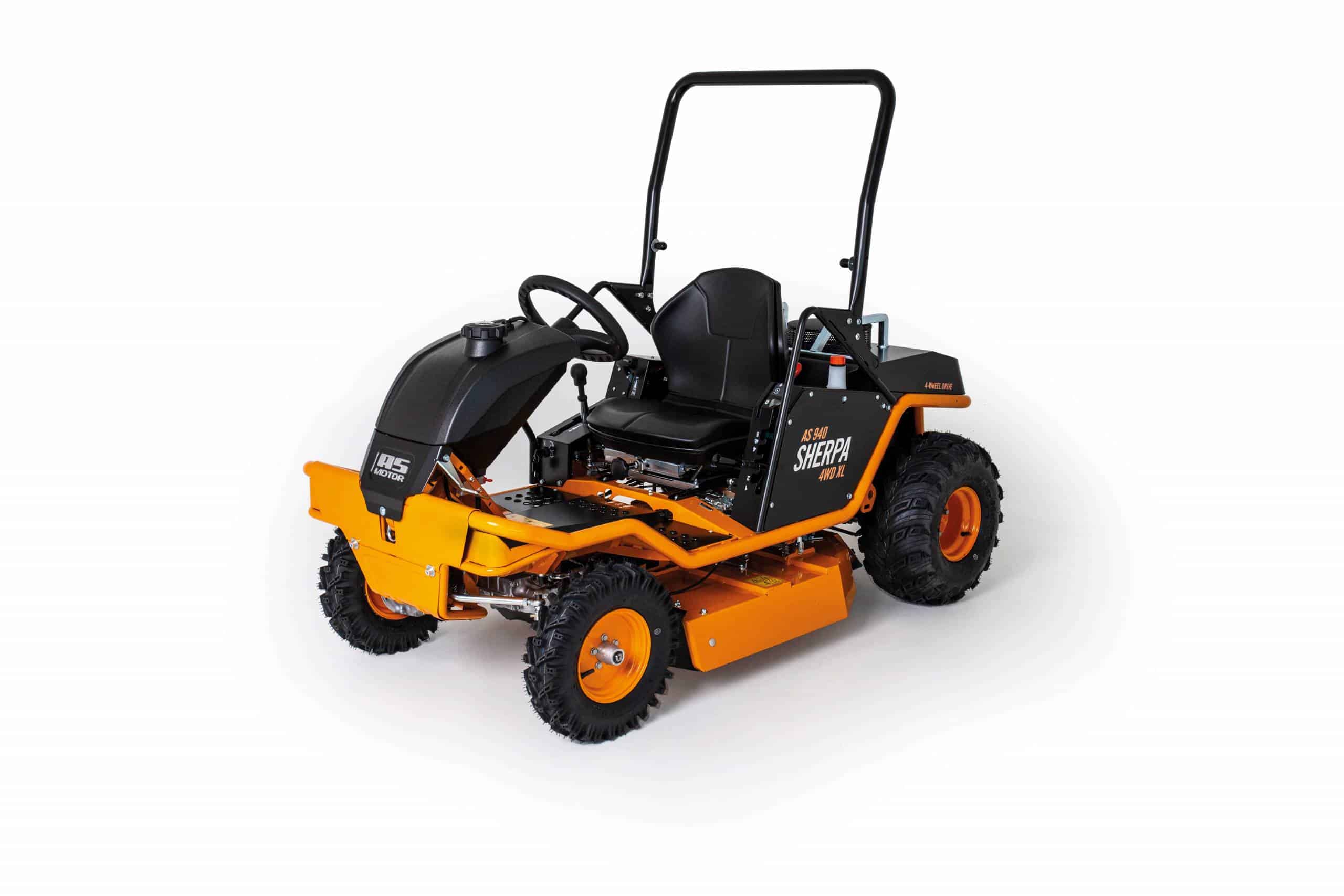
Nisu sva područja potrebno stalno kositi – u nekim područjima dovoljno je kositi jedan ili dva puta godišnje. Ovdje, mulčanje nudi privlačno rješenje i eliminira proces odlaganja rezidbe koji je intenzivan po vremenu i troškovima. Za blage padine preporučuju se profesionalne AS 65 i AS 73 Allmähers i ručne košilice AS 701 i AS 901. Tehnologija daljinskog upravljanja AS 940 Sherpa RC jamči učinkovitost i sigurnost operatera na ekstremnim padinama.
Kaldrmisana područja
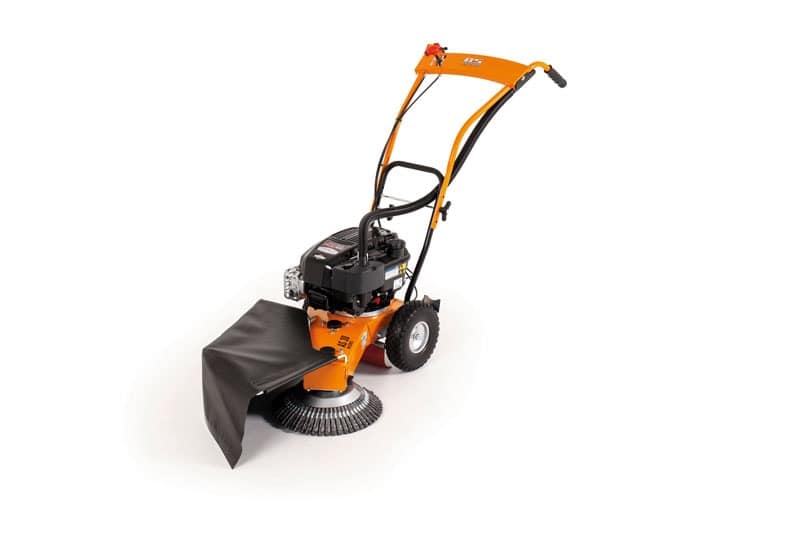
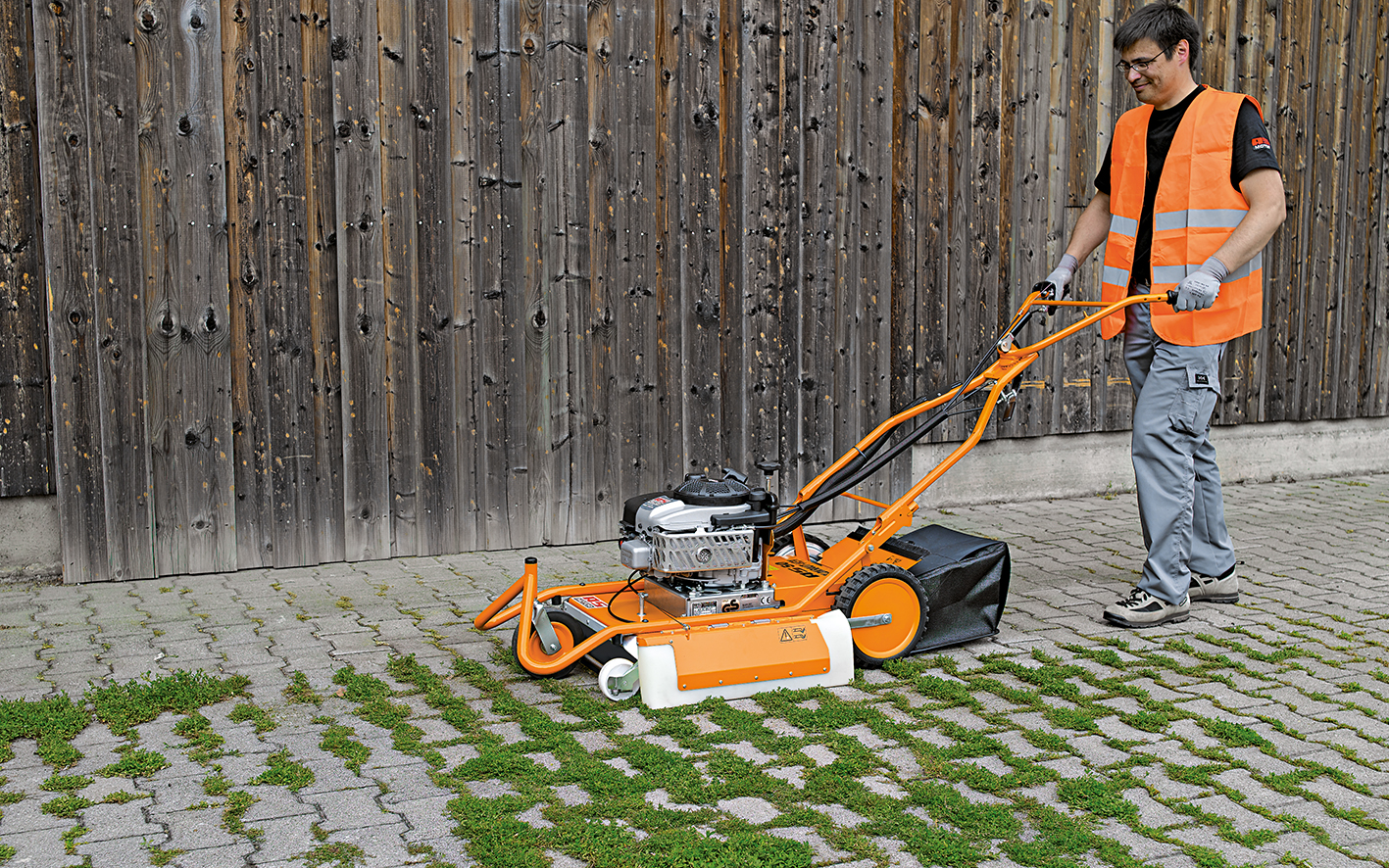
Mehanički uklanjači korova AS-Motora dizajnirani su za uklanjanje korova s kaldrmisanih i popločanih površina bez upotrebe kemikalija. AS 30 i AS 50 WeedHex postižu izvanredne rezultate rada uz poštovanje okoliša i stanovnika.
Kategorije
All-wheel drive
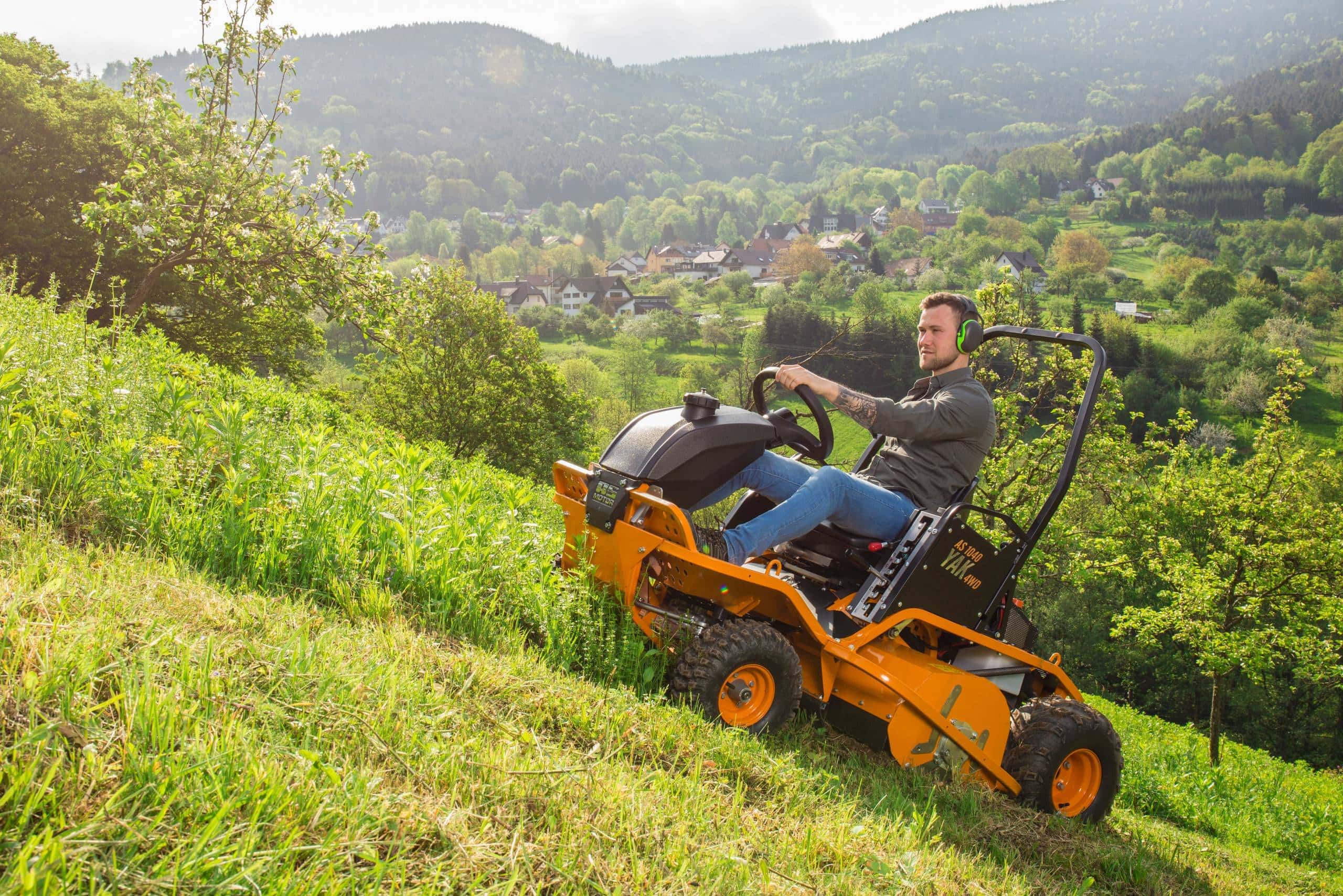
All-wheel drive not only ensures performance on inclines over 30 degrees, but also a high level of safety for travel downhill. All-wheel drive delivers propulsion in wet conditions and on uneven terrain – even if the wheels of one axle no longer have traction.
Flower meadows
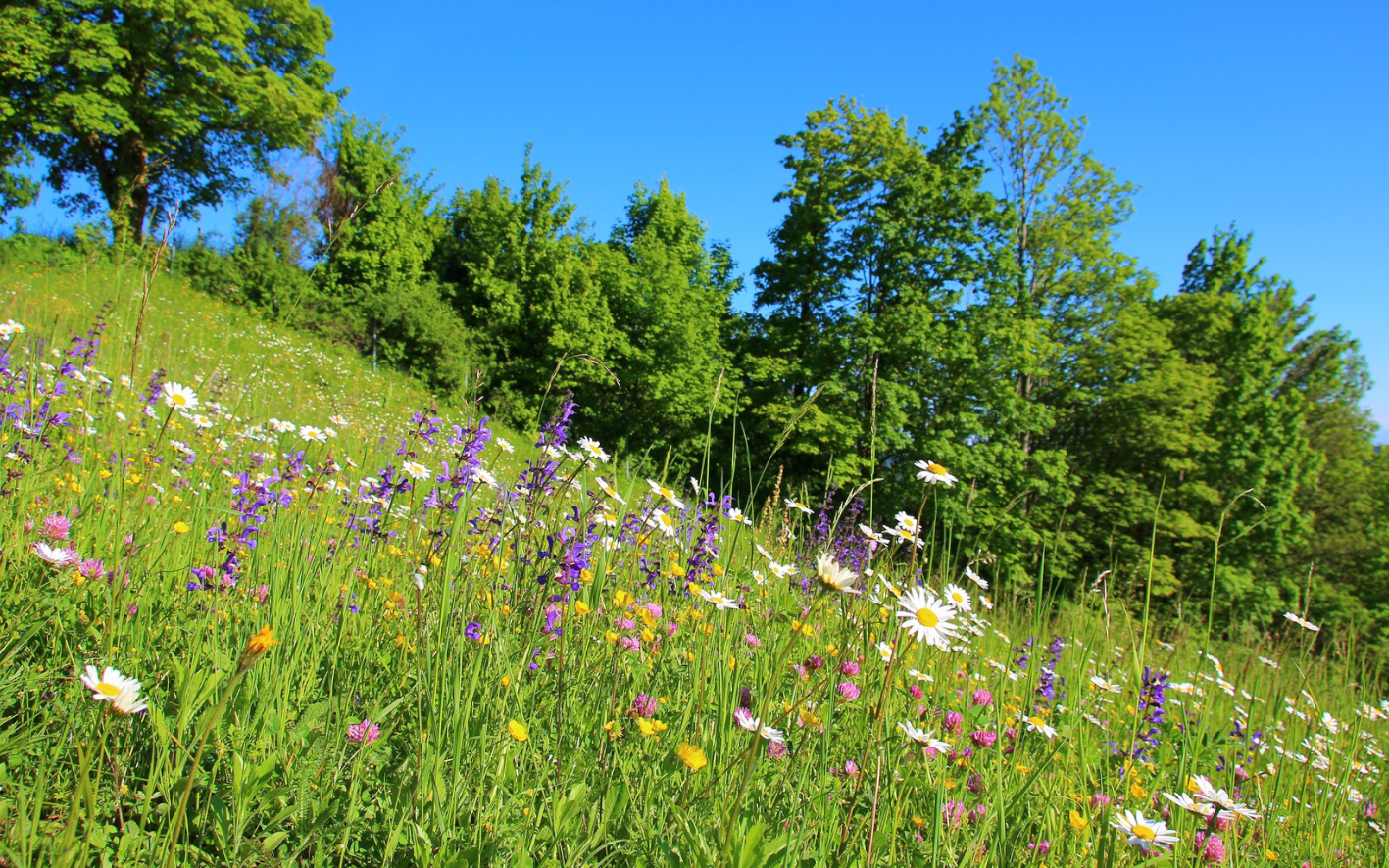
Flower meadows are structurally rich habitats that are extremely important for insects, wild bees, and species that depend on flowers. The key is not to mow frequently, but to cut at the right time. Before the flowering phase, the vegetation can quickly reach heights of 30–40 cm. After that, maintenance is carried out at longer intervals, usually once or twice a year.
This form of extensive use requires machines that can safely cut tall, heterogeneous vegetation without putting unnecessary strain on the area. Clean cuts, controlled deposition, and an adapted driving style are essential for preserving plant populations and enabling regeneration.
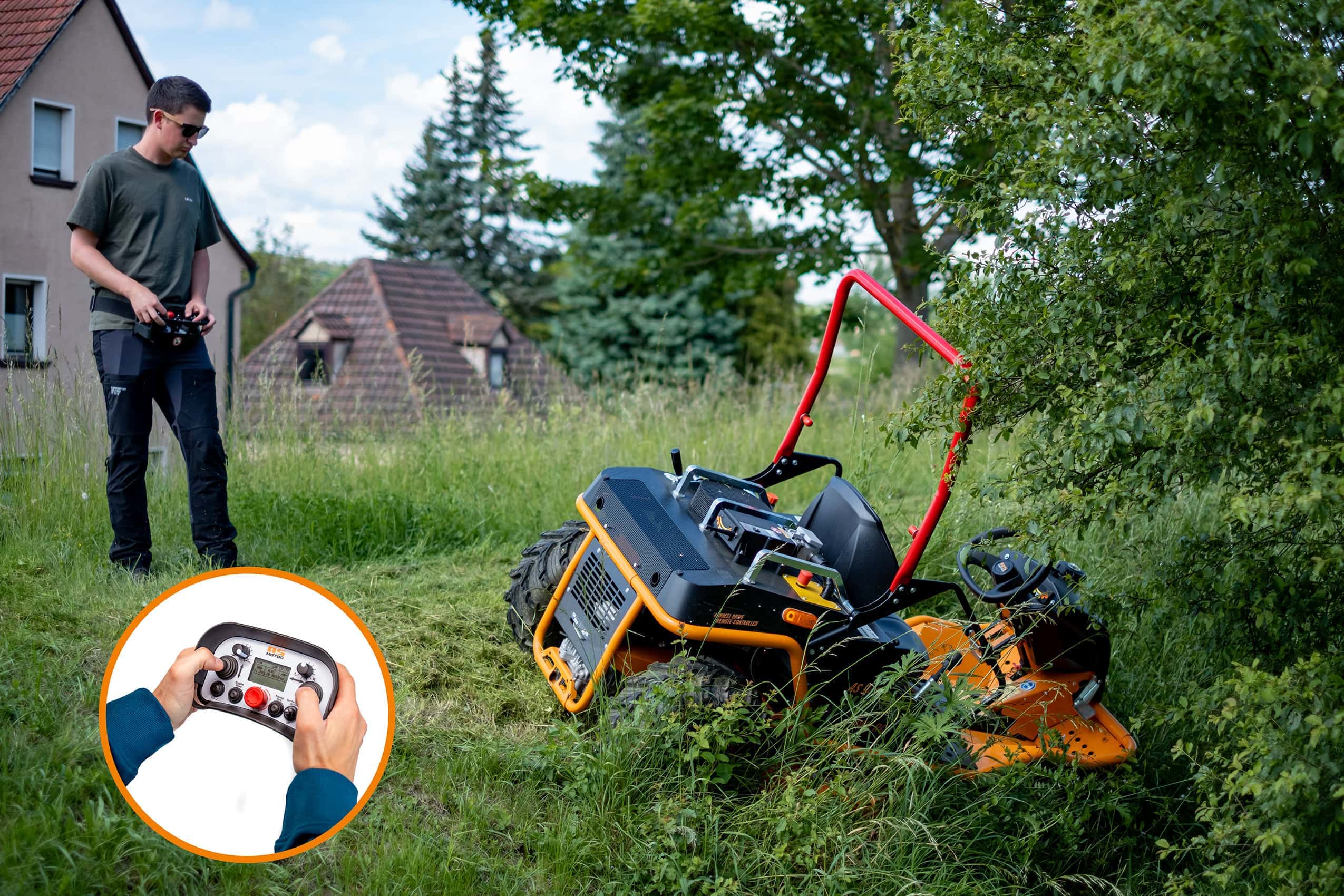
Remote-control
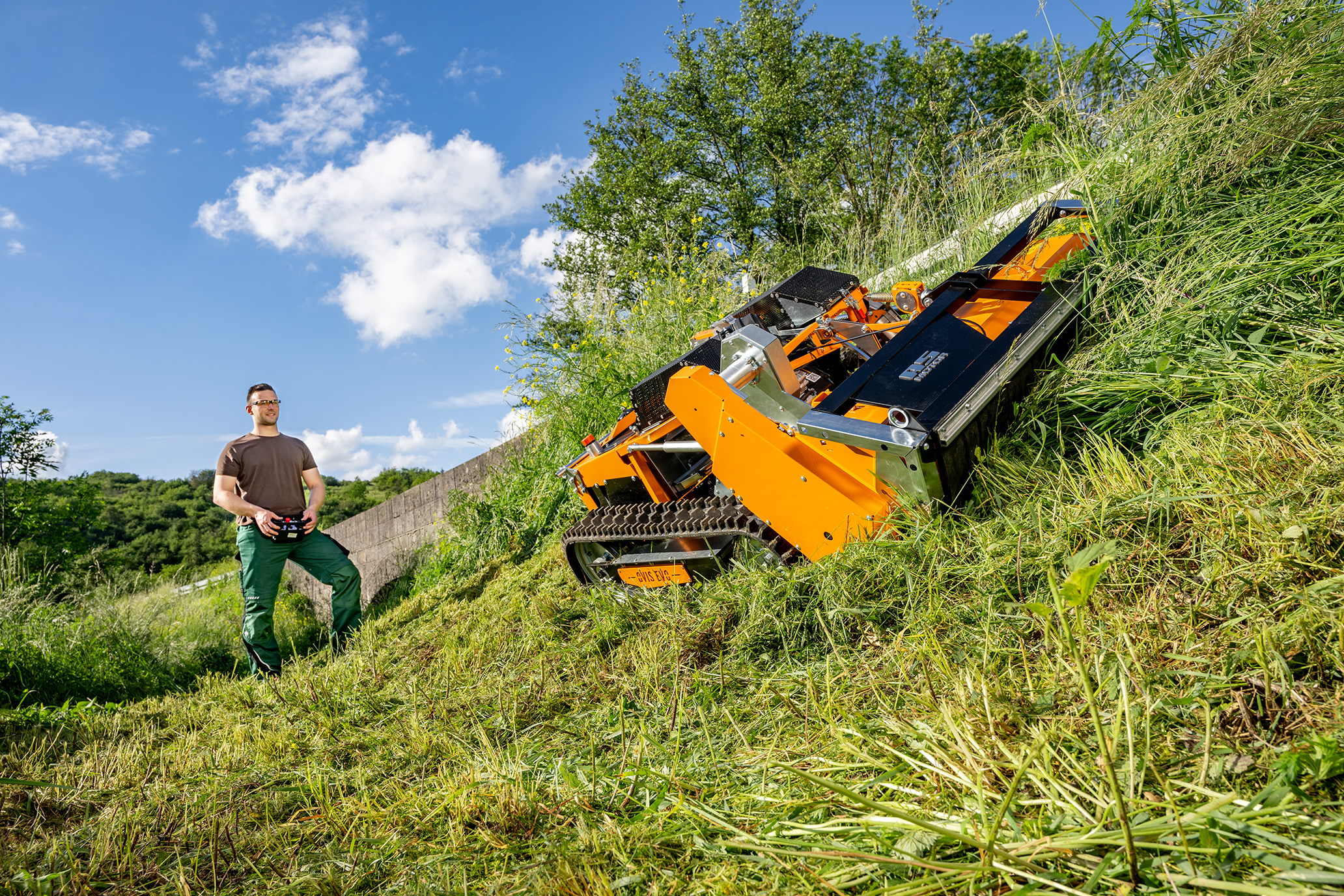
Remote controlled devices make the mowing of extreme slopes possible. This technology also allows the operator to mow at a safe distance from dust, wasps, ticks and other hazards.
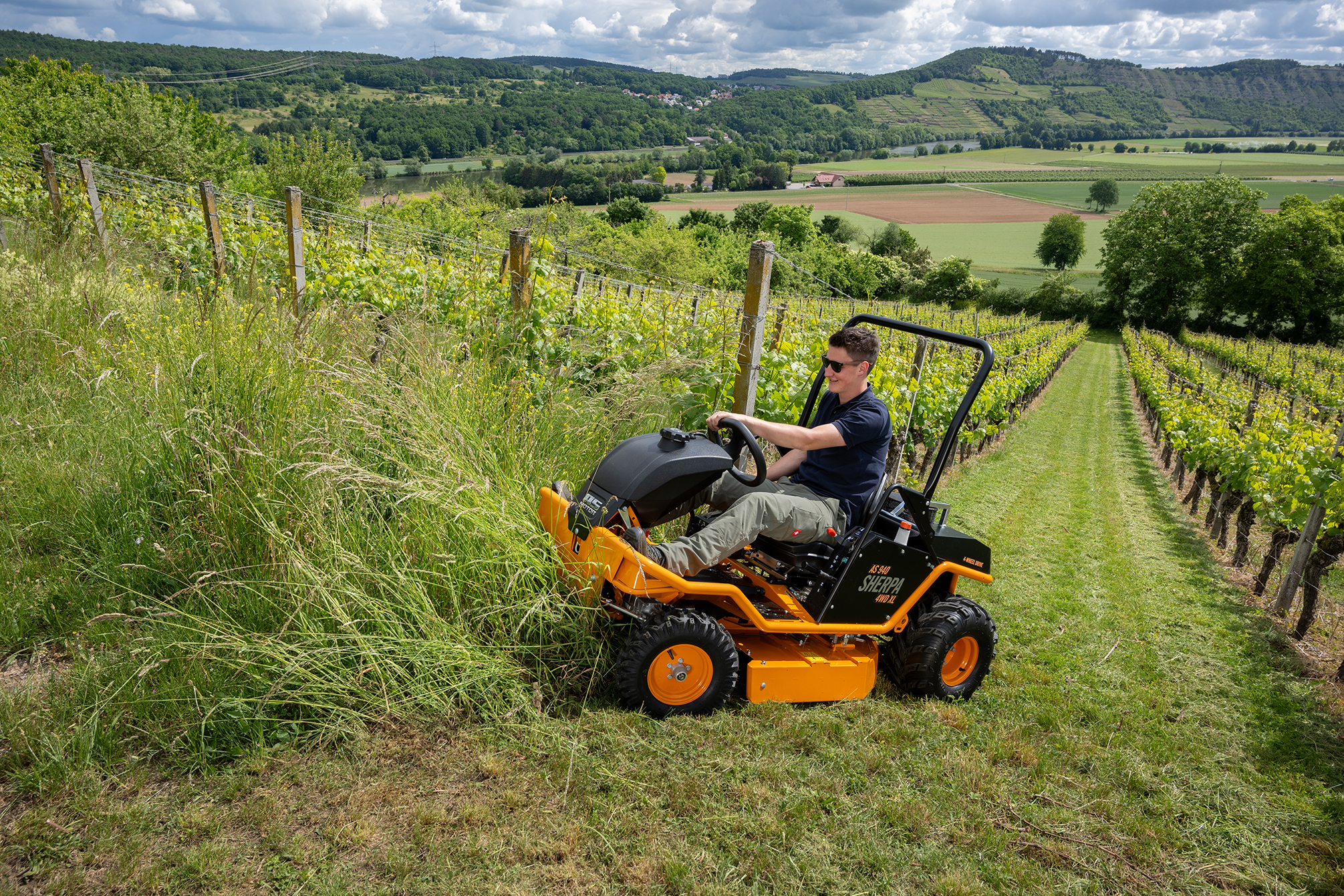
Slopes
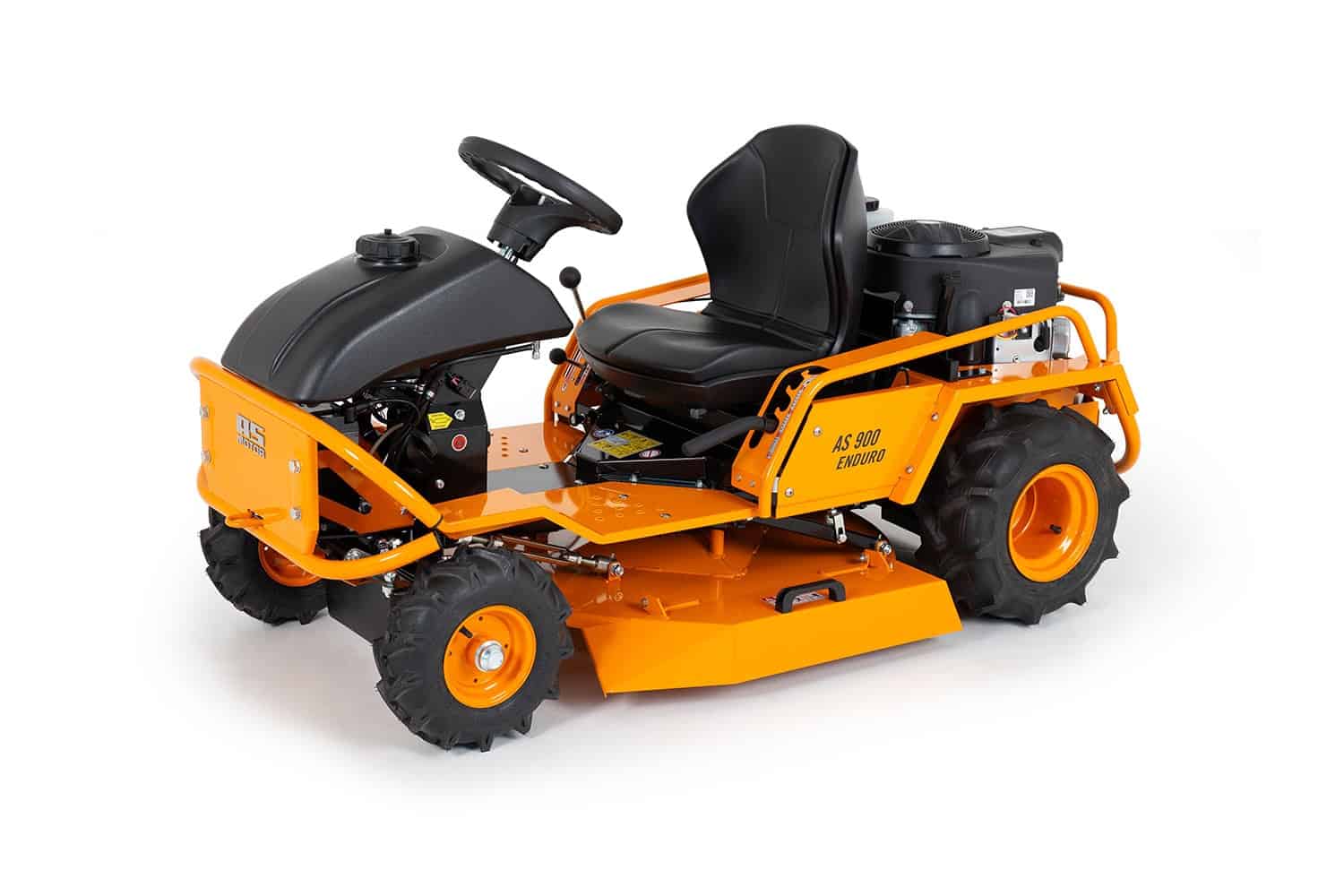
AS-Motor engineers machines with high ground clearance, steep ramp angles, low overall weight, optimal weight distribution and a low centre of gravity to perform on slopes.
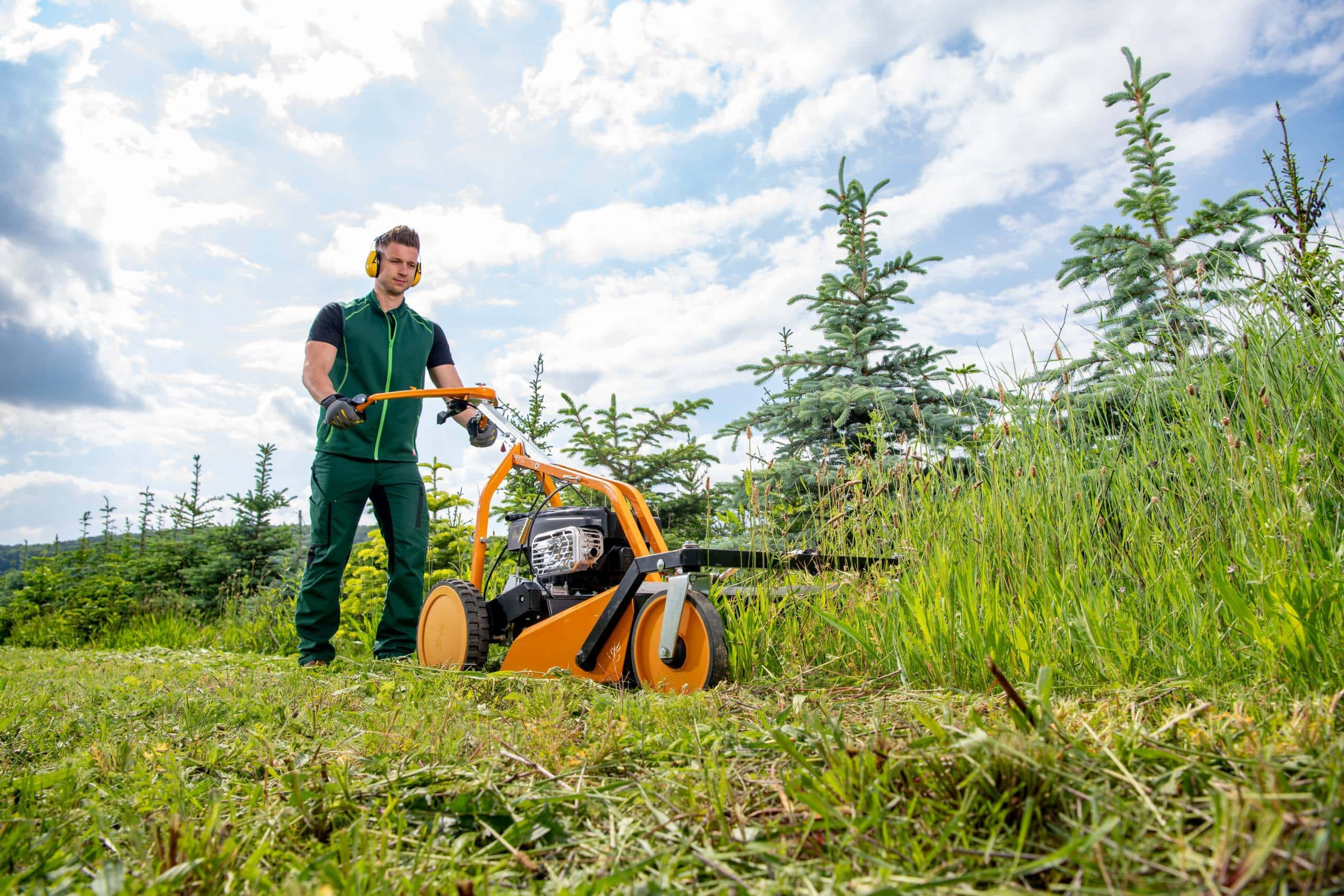
High meadow grass
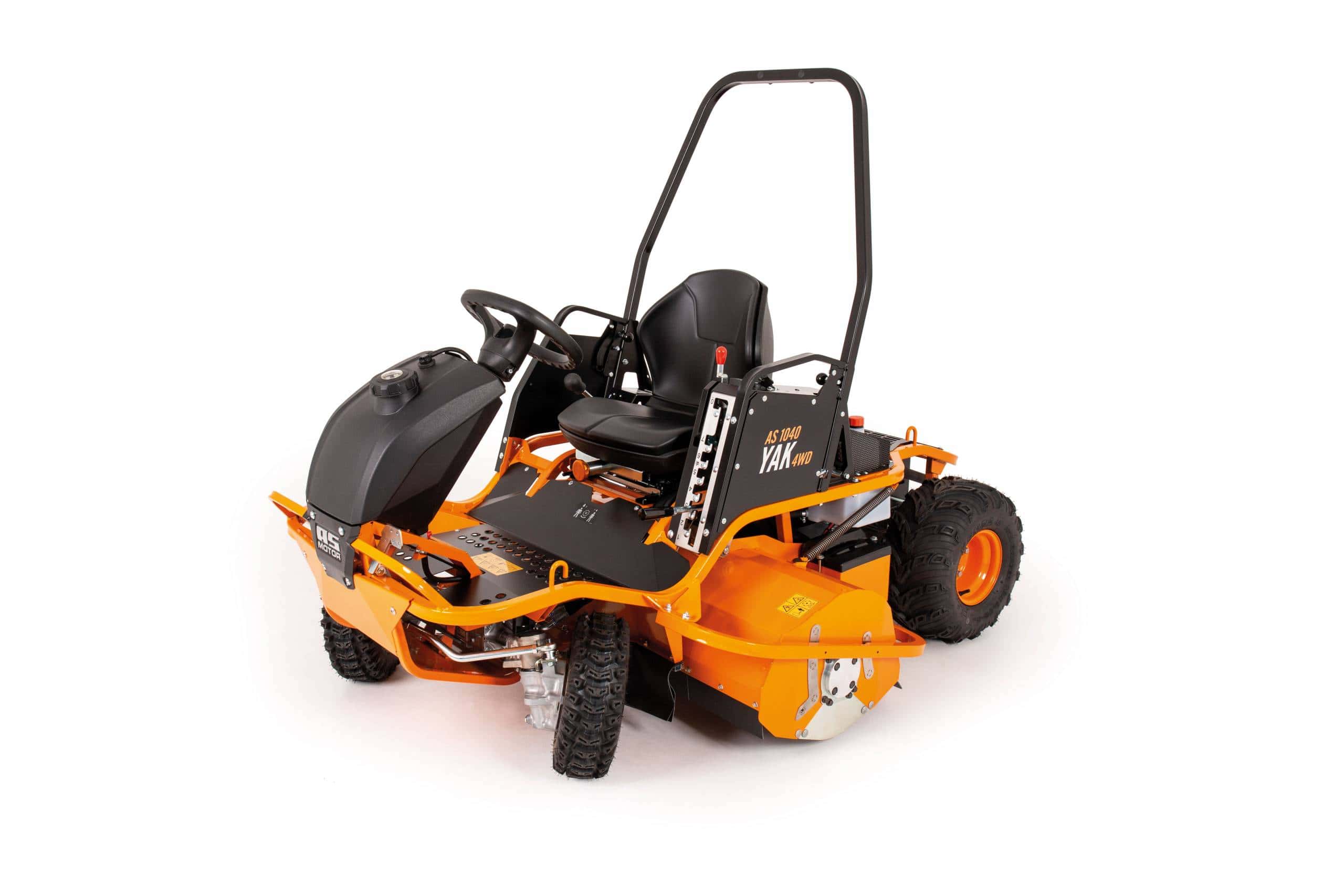
Extensively used meadows such as orchards, compensation areas, or roadside greenery are deliberately mowed only once or twice a year. The vegetation reaches heights of 60 to over 100 cm and forms dense, structurally rich stands.
This form of maintenance serves to keep the area open and suppress woody plants, not to maintain the lawn. Machines with high throughput, uniform cutting performance, and controlled deposition of the cut material are required. This is the only way to efficiently manage large amounts of biomass without overloading the area or damaging the soil and vegetation.
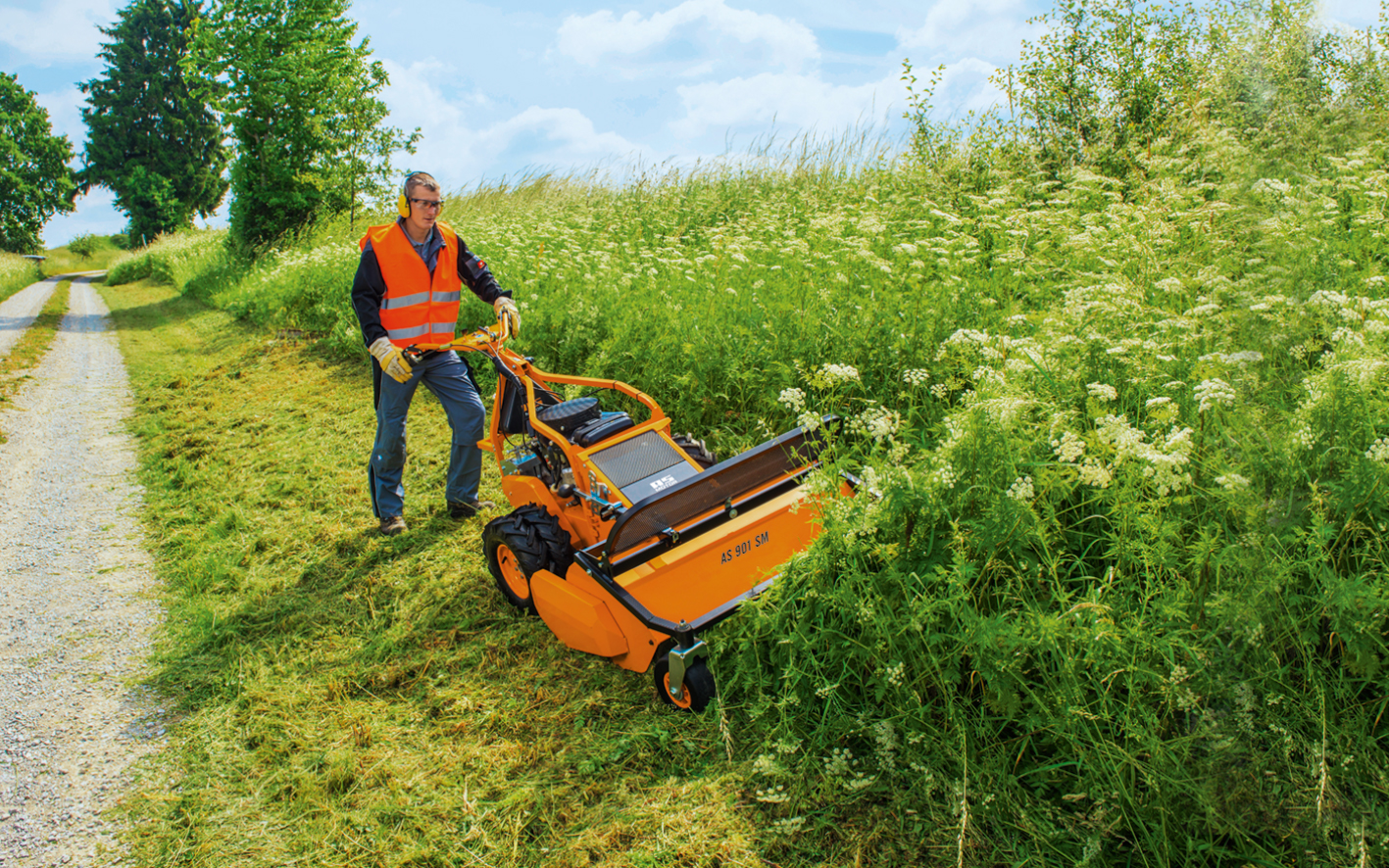
Professional technology
During the mowing season, professional operators often run their machines 5 days per week, 8 hours per day. AS-Motor’s machines are unbeatable in terms of quality, durability and professional work results. Additional advantages include low weight, lashing points and compact transport dimensions.
Uneven terrain
Animal burrows, anthills, mole hills and water channels cause uneven terrain. Several AS-Motor machines have high ground clearance, all-wheel drive and limited slip differential, along with appropriately studded field tyres, for uneven terrain.
Ornamental lawns
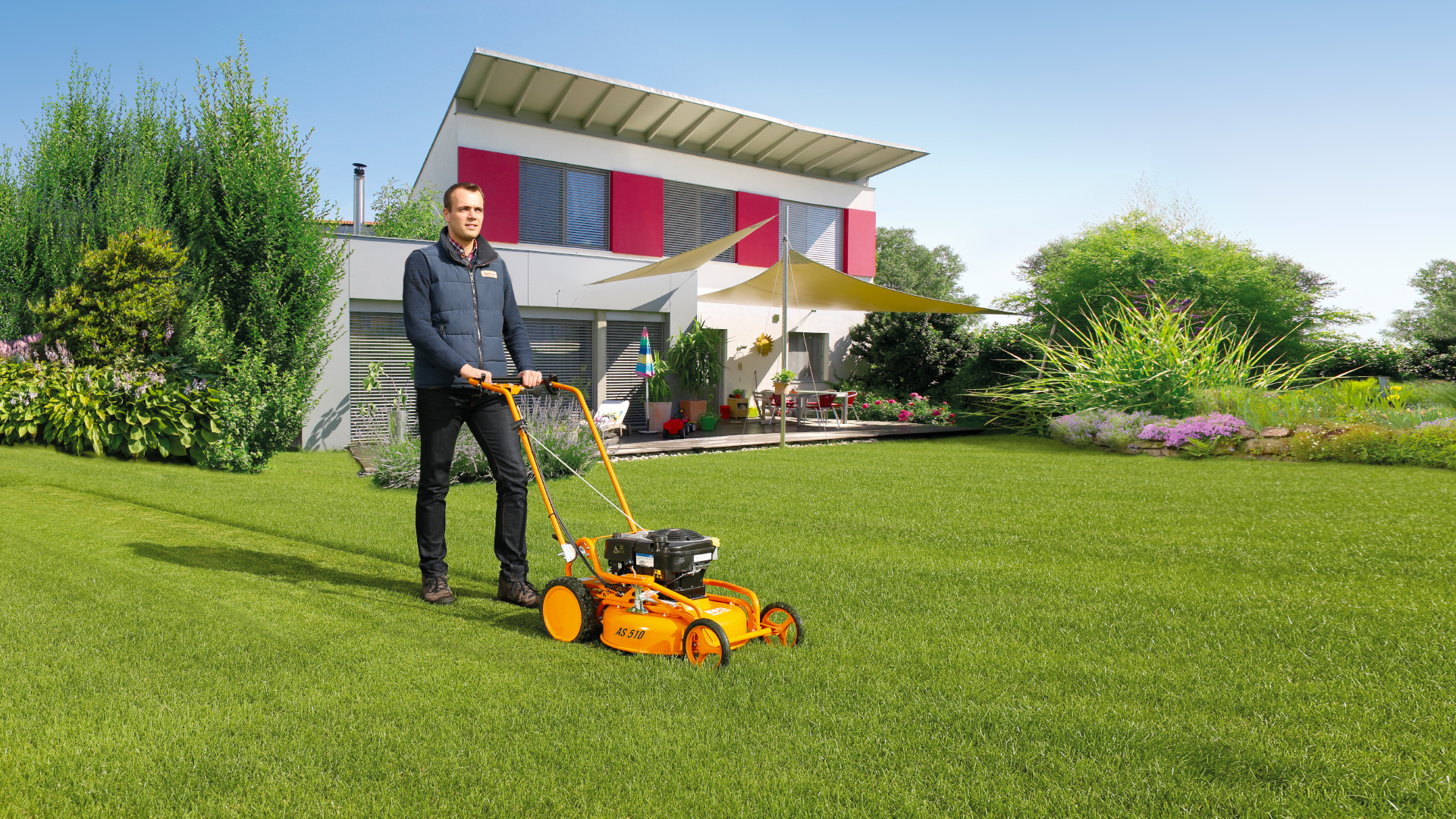
Ornamental lawns in both private gardens and public facilities can be maintained with either mulching or collecting mowers. When mulching, the finely-shredded cuttings remain on the surface as natural fertiliser, while collection bags help the operator transport cuttings to a disposal point. Lawns are usually mowed once per week to a cutting height of 40–50 mm, from a maximum height of 15 cm.
Interlocking paving stones
The AS 50’s high work rate delivers efficient weed removal on large and uneven surfaces such as a car parks, commercial areas and paths. A collection bag eliminates the need for sweeping and surface cleaning.

Mulching
Mulching is a process by which grass cuttings are shredded several times into a fine mulch, which then remains on the surface as natural fertiliser. Special mulching blades with a double cutting plane and a circular mulching unit are used on ornamental lawns, while cross-blade systems or flail mowers are primarily used in high grass.
Ecological mowing & extensive land management
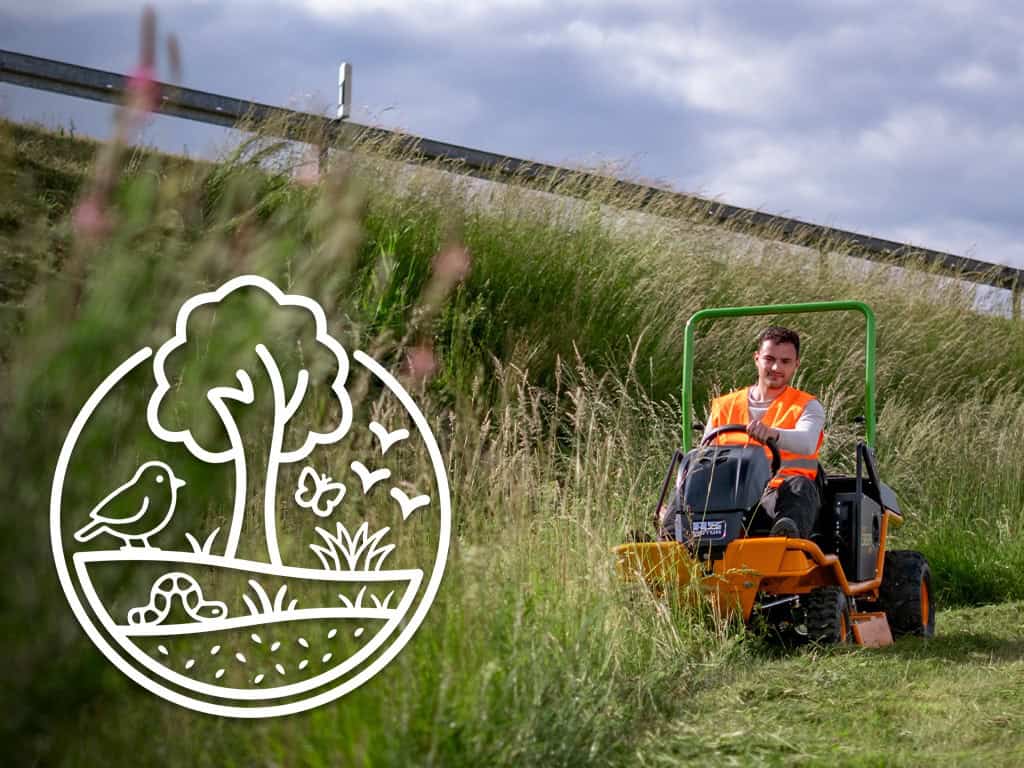
Ecological mowing and extensive land management focus on reduced, targeted interventions instead of blanket mowing. Cutting heights, timing, and maintenance intervals are based on vegetation development and site conditions, not on maximum area coverage.
Sub-areas are mowed on a rotating basis, while others are deliberately left untouched. This creates varying growth heights, refuges, and stable structures on extensive meadows, compensation areas, municipal green spaces, and in landscape management. Technology is used for control, not intensification.